
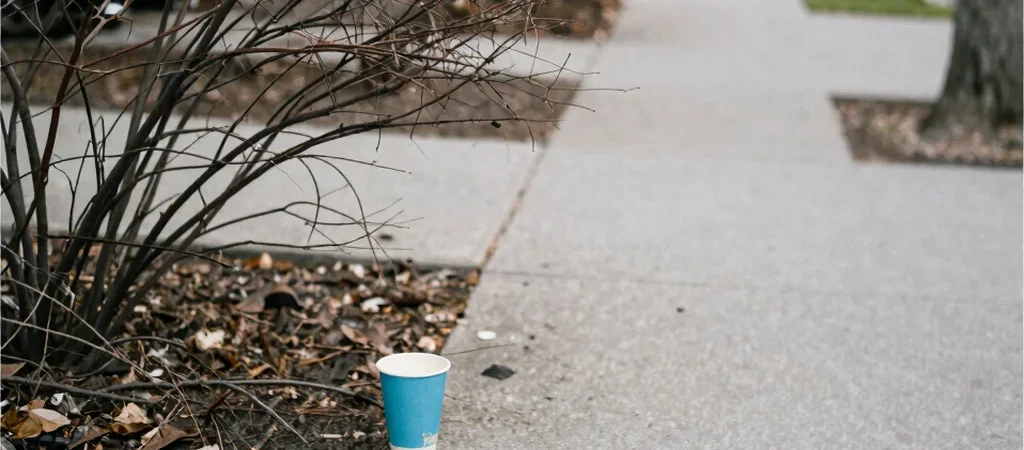
On the same block you walk every day, a paper cup may be caught in the branches of a street tree, turning slowly whenever the wind picks up. The route has not changed. Your attention has.
Notice Before You Interpret
It is tempting to decide at once what a detail means: the cup is litter, the tree is bare, the morning is gloomy. But looking for a few seconds longer often gives you something more exact: the cup’s faded blue rim, the last dry leaves caught beside it, the way a passing bus stirs both.
That extra moment does not turn a walk into a grand revelation. It simply replaces a broad impression with a particular one, and particular things are easier to remember.
Let the Detail Stay Small
Not every observation needs to become a lesson. A chipped mug on the counter can remain a chipped mug; sunlight on the kitchen floor can be pleasant without standing for anything else. There is a quiet relief in allowing a thing to be itself.
Try naming one thing you noticed today without explaining it. Keep the description plain and specific. That small practice can make an ordinary afternoon feel less like a blur.